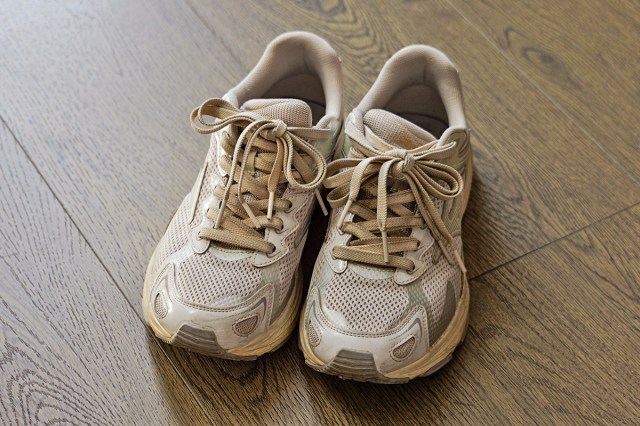

Original photo by PeopleImages/ iStock

Certain aspects of aging are inevitable, such as the silvery hairs we sprout and the crinkly lines that appear when we smile. While these surface-level indicators tend to get all the attention, they aren’t nearly as important as how well our minds and bodies function as we grow older. 

From slowing down on your daily walk to forgetting where you left your keys (again), small changes can indicate bigger shifts in your physical or cognitive health. The good news is that there are simple, science-backed tests you can take at home right now to measure several key components of aging: balance, memory, muscle mass, cognitive flexibility, and mental well-being.
Credit: microgen/ iStock

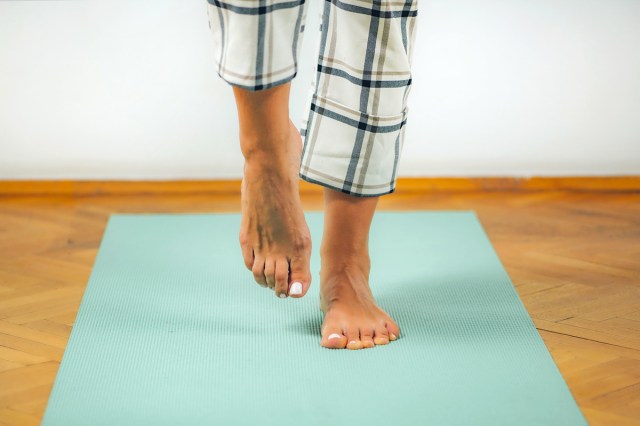
One-Leg Stand for Balance

According to UCLA Health, your balance begins to decrease as early as age 50. For example, one study revealed the average adult in their 30s and 40s could stand on one foot for at least a minute, but by age 50, that time decreased to around 45 seconds. By 70, that dropped to around 28 seconds, and participants age 80 and older held the pose for just 12 seconds. This decrease in balance leads to an increased risk of falls and injuries, which can ultimately result in a decline in independence.

Moreover, in a Mayo Clinic study to determine which physical abilities are most affected by aging, participants underwent a series of tests, including walking, grip strength, knee strength, and balance, the last of which was measured by the one-leg stand. The results indicated the ability to stand on one leg declined most rapidly with age, reinforcing the idea that this test is a valuable indicator of how well a patient is aging physically. 

To perform the test, stand up straight and lift one foot off the floor, then time how long you can hold that pose. (It’s fine to hold onto the leg you aren’t standing on.) Are you under par for your age group, based on the aforementioned numbers? It may be time to start incorporating balance exercises into your daily routine.

Credit: fizkes/ iStock

Recall Test for Short-Term Memory

One common sign of aging is memory decline, which typically begins in your 50s or 60s. Short-term memory tends to deteriorate faster than long-term memory because short-term memory is primarily stored in the hippocampus, a complex region of the brain that’s particularly vulnerable to aging.

As we age, the brain begins to shrink. This process can start as early as our 30s, but it tends to accelerate after age 60. The hippocampus shrinks more than other areas of the brain, putting short-term memories at greater risk. 

Additionally, certain types of long-term memories, such as episodic and declarative memories, are also at risk because they too are stored in the hippocampus. While increasing difficulty with memory is a normal part of aging, you may wonder how well your recall abilities are holding up.

To test your short-term memory, enlist a friend or family member to try this quick exercise recommended by the Institute on Aging. The task is straightforward: Ask someone to say three unrelated words (such as “apple,” “blue,” and “chair”) and then repeat those words back. Then complete a simple task, such as conversing about your weekend plans or drawing a picture of a tree, before reciting the three words again. 

Running into trouble? It may just be a fluke (in which case you should repeat the exercise multiple times to confirm the results), or it could be a cue that your brain needs a little more TLC. Try puzzles, reading, and other mental exercises to stimulate the mind.

Credit: courtneyk/ iStock

Sit-to-Stand Test for Muscle Mass

Muscle mass decreases approximately 3% to 8% per decade after the age of 30, and this rate of decline can become even more dramatic after age 60. This decrease in muscle mass, known as sarcopenia, results in a loss of strength and function as well as an increased incidence of falls and injuries, all of which are significant factors in the aging process. 

While slowing down physically is a natural part of growing older, you may wonder how your rate of muscle mass loss compares to the average. Fortunately, there are ways to test yourself at home.

The sit-to-stand test is a reliable physical test used to assess endurance, lower body strength, and mobility. The test takes various forms, but one of the simplest at-home versions is the five-time sit-to-stand test, which is commonly used to test for sarcopenia. 

To perform the test, sit in a chair with your arms crossed over your chest and start a timer, then stand up and sit back down, stopping the timer when you’ve completed five up-and-down cycles. The recommended “cut-off” time is between 10 and 11 seconds. If it takes you longer than 11 seconds to complete five cycles, it’s a good indication to start working on your lower body strength and building muscle.

Credit: DMP/ iStock

Dual-Task Exercises for Cognitive Flexibility

Dual-task exercises assess both your physical and cognitive abilities through short, two-in-one tests. Doing cognitive tests while performing physical exercises measures something called cognitive flexibility, aka your ability to adapt and switch between different mental tasks or sets of information in response to changing environments —an ability that naturally decreases during the aging process.

While researchers have come up with plenty of intricate methods to test your cognitive flexibility, there are easier ways to test yourself with at-home dual-task exercises. One of the simplest tests is to walk while performing a brain exercise, such as solving mathematical equations, counting backward from 100, or repeating word sequences. Compare your completion speed of these brain exercises to your speed while you’re sitting or standing still. If you’re significantly slower during the dual-task exercise, it’s time to start working out your brain.

Credit: O2O Creative/ iStock

Social Circle Check-In for Loneliness

The data is in: Loneliness can make you age faster. Scientific research supports the notion that loneliness (and poor mental health in general) can be just as detrimental to your physical health as some diseases or illnesses. As Mayo Clinic cardiologist Amir Lerman explained to AARP, “The focus tends to be on lowering cholesterol, managing blood pressure, and other healthy habits. But socializing? Sometimes we ignore this part.” 

Negative health impacts of loneliness include a higher risk of developing dementia, depression, and heart disease. Moreover, a study by the Mayo Clinic found that individuals who were less likely to participate in social activities such as clubs, services, and get-togethers were more likely to have a “biological age” (the age determined by the functional state of your body) older than their actual chronological age.

The harsh reality is many adults are unaware of their own loneliness, and some have a tendency to isolate themselves as they get older. To determine your level of social connection, try completing the UCLA Loneliness Scale survey. This brief, 20-question assessment was developed by psychologist Daniel Russell to measure how frequently a person feels disconnected from others. 

The test uses a four-point rating system; the higher the score, the greater the participant’s feeling of loneliness. The results of this survey may highlight your need to engage in new social activities or reengage with those you may have had fall by the wayside. Not only will you make new friends or reconnect with loved ones, but according to science, you can also slow down the aging process.

Rachel Gresh
Writer

Rachel is a writer and period drama devotee who's probably hanging out at a local coffee shop somewhere in Washington, D.C.

Original photo by juan mendez/ Pexels

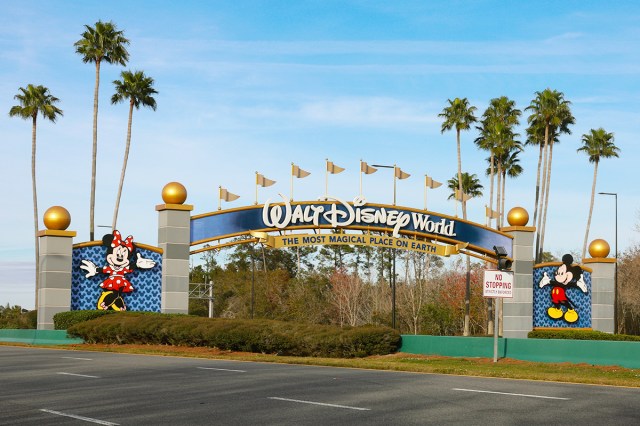
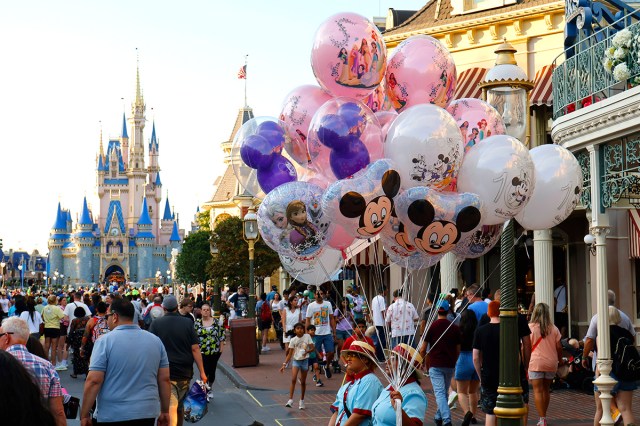
Few places on Earth inspire wonder quite like a Disney theme park. With imagination, innovation, and a touch of pixie dust, Disney creates an immersive experience where the magic feels real. It’s no surprise these parks rank among the most popular worldwide; in fact, Orlando’s Magic Kingdom holds the Guinness World Record for the most visited theme park.

Of course, bringing this enchantment to life requires a massive workforce. Magic Kingdom alone employs 77,000 people, making it the largest single-site employer in the United States. At the heart of this whimsy are Disney’s “Imagineers,” the creative minds who come up with everything from carefully crafted architectural illusions to innovative scent technology.
So, what really happens behind the scenes at the “Happiest Place on Earth?” Let’s pull back the curtain to uncover the clever tricks that have kept the illusion alive for generations of guests.

Credit: Joe Raedle/ Getty Images News via Getty Images

“Go Away Green” and Other Unassuming Colors

More than 30,000 unique paint colors are splashed across Disney parks, covering everything from buildings and walkways to shops and attractions. The most notable of these hues are also the most inconspicuous: “Go Away Green,” a range of shades specifically designed to be ignored.

Longtime Disney employee John Hench created the color as part of a catalog later called the “Hench Color System.” When Disney Imagineers want guests to overlook unsightly but necessary features such as electrical boxes or storage sheds, they typically use Hench’s “Go Away Green” because it blends in seamlessly with the parks’ lush landscapes. There are other unobtrusive color options as well, such as “Go Away Blue,” which is intended to blend in with the sky.

Conversely, some colors are intended to stand out. In Epcot, for example, the pavement is painted a particular shade of pink to complement the color of the surrounding landscaping. This strategy is based on simple color theory and makes the greenery appear more vibrant because red and green are opposite each other on the color wheel.

Credit: Gary Hershorn/ Corbis News via Getty Images

“Smellitizer” Machines

Disney parks offer a full sensory experience for guests, including carefully crafted scents. This is why the delightful aromas of candy and popcorn that waft down the sidewalks of Magic Kingdom’s Mainstreet, U.S.A are no coincidence. Those are achieved using scent machines called “Smellitizers” that release fragrances throughout the parks.

Jody Jean Dreyer, the former head of synergy and special projects at Disney, emphasized in an interview with Fast Company that Imagineers are “mindful that people are using all their senses” during their visit. Scents are strongly tied to emotions and often help us form lasting memories, which is why Imagineers employ various scents to make an impact on guests and transport them into different lands, attractions, and experiences.  For instance, guests are greeted in the lobby of Disney’s Polynesian Village Resort by a perfume of hibiscus flowers, instantly transporting them to a Pacific island without leaving Orlando.

Disney has patented a technique called “scent blending” for use on rides. This technology gradually disperses scents, allowing for smooth transitions between scenes, similar to audio or video transitions in movies that are designed to be subtle, not jarring. As one scent fades, another becomes more prominent, creating a more natural, seamless experience for guests.

Credit: russell102/ Adobe Stock

Forced Perspective

One of Disney’s most impressive tricks is the use of forced perspective throughout its parks, allowing buildings and landmarks to appear larger, smaller, closer, or farther away than they actually are. As explained by the popular YouTube channel Art of Engineering, forced perspective allows Disney to create “unbelievable structures that would otherwise be impossible, or at least too impractical, to construct in reality.” For instance, Disneyland’s Sleeping Beauty Castle is only 77 feet tall, but it appears to soar to greater heights thanks to this optical illusion.

On Disneyland’s Main Street, U.S.A., forced perspective is employed to make buildings appear taller than they actually are. The ground floor of each building is constructed close to normal size, while the upper floors are scaled down gradually, becoming smaller as they rise. Since our brains naturally expect each floor to be the same height, this shrinking technique creates the illusion that the buildings are much taller. This design enhances immersion, allowing Disney to achieve a grand effect without the need to construct full-scale buildings.

By contrast, the American Adventure building in Walt Disney World’s Epcot is designed to appear smaller than it actually is. Although it stands five stories tall, it appears to be only two and a half stories high. This is achieved by incorporating exaggerated architectural features, such as oversized windows and doors, in the exterior. This design choice allows the structure to have the more diminutive appearance of real-life colonial architecture while providing more internal space for theaters, a gallery, and a restaurant.

To make objects appear very far away, size alone isn’t always enough. This is where “atmospheric perspective” comes in. This concept involves adjusting the colors of objects to mimic the way color changes as light travels through the air, influenced by water droplets and small particles in the atmosphere. Those factors cause colors to fade or change. 

In the case of Disneyland’s Sleeping Beauty’s castle, warm pink hues are used on the lower towers, while the top features a cooler tone by incorporating blue. This gradation helps the landmark appear much taller and more majestic.  

Credit: Jonathan Blair/ Corbis Historical via Getty Images

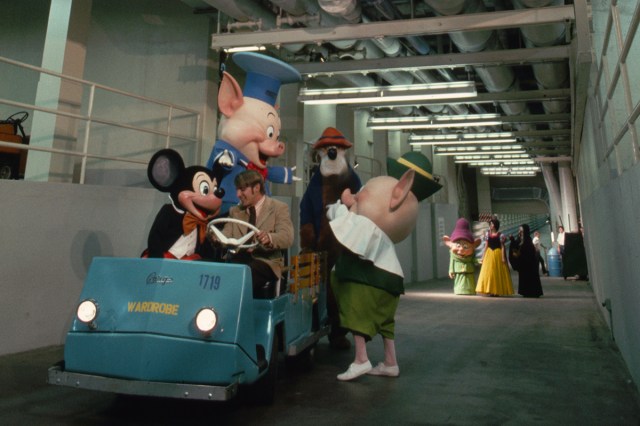
“Utilidor” Tunnels

One of the secrets behind Disney’s signature magic is how effortlessly it keeps its behind-the-scenes operations hidden from guests. In fact, the guest-accessible areas of Walt Disney World’s Magic Kingdom are built on the second level of a massive structure. Beneath guests’ feet, on the actual ground level, is the “utilidor“— a portmanteau of “utility” and “corridor” — a sprawling tunnel system that quietly powers the park.

The utilidor system connects all corners of the park via 29 access points, allowing Disney’s “Cast Members” and supplies to move between areas without crossing paths with guests, preserving the immersiveness at all times. The tunnels also house essential utilities (sewer lines, electrical wiring, and plumbing) as well as staff-exclusive necessities such as dressing rooms, offices, breakrooms, and the Mouseketeeria dining facility.

While typically off-limits to the public, guests aged 16 and older can experience the utilidor by joining Disney’s Keys to the Kingdom Tour, a guided experience that allows visitors to discover this backstage area. 

Credit: Judi Saunders/ Alamy Stock Photo

High-Speed Trash Tubes

Guests won’t encounter any trash pileups at Disney’s Magic Kingdom (the most-visited Disney park in the world) thanks to an advanced trash removal system. Every 15 minutes, this underground system of vacuum tubes transports waste to a trash compactor at an astonishing 60 miles per hour. That’s as fast as TRON Lightcycle Power Run, the fastest ride at the Magic Kingdom. 

However, individual trash cans themselves aren’t connected to this system. Instead, custodians empty the hundreds of bins spread across the park into one of 17 collection stations. The waste ends up in a trash compactor behind Splash Mountain, where it’s then removed from the park.

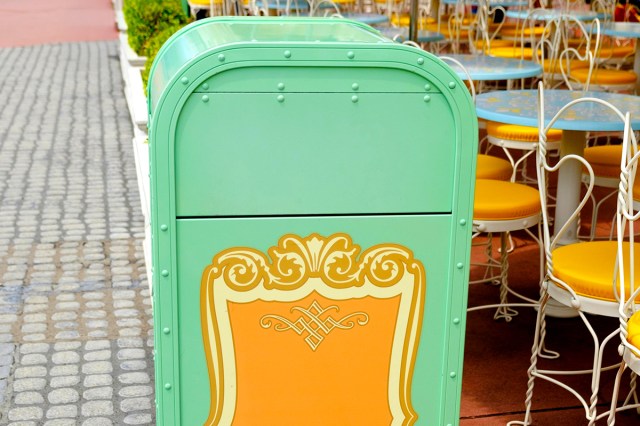
According to CBS News, when Walt Disney was designing his first park — Disneyland in Anaheim, California — he noted that if trash cans were more than 30 steps apart, people had a tendency to litter. He decided Disney’s trash cans had to be closer together than that, and since it’s Disney, they’re no ordinary waste receptacles. They’re specially designed to blend in with their surroundings: For example, the cans in Star Wars: Galaxy’s Edge feature space-themed motifs, while the bins next to the castle are adorned with princess-pink patterns.

Rachel Gresh
Writer

Rachel is a writer and period drama devotee who's probably hanging out at a local coffee shop somewhere in Washington, D.C.

Original photo by lixu/ iStock

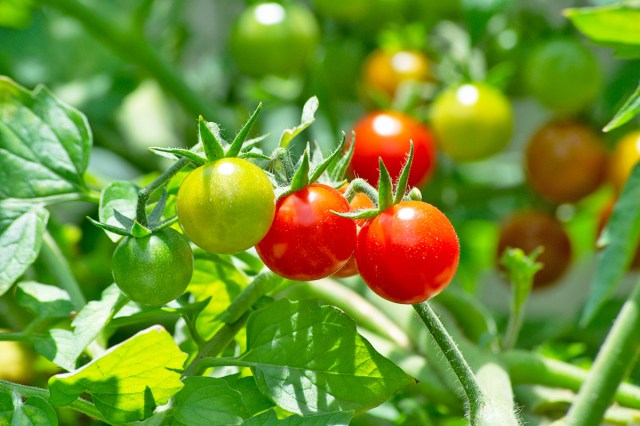
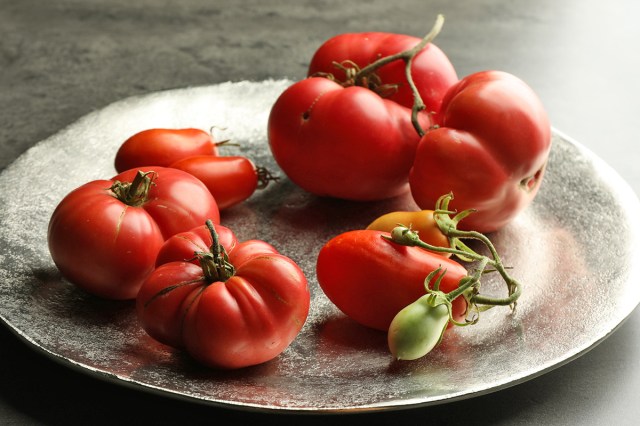
Whether chopped up in a salad, sliced onto a sandwich, or pulverized into pasta sauce, tomatoes are widely regarded as a delicious and nutritious treat. But in addition to their culinary versatility, these juicy red orbs possess a rich history that extends far beyond the kitchen. 

Tomatoes have been the subject of court cases, used as ammo in citywide food fights, and have even made their way into outer space. Here are seven mouthwatering facts about the humble yet mighty tomato.

Credit: Ming/ Adobe Stock

Heinz Tomato Ketchup Has a “Speed Limit”

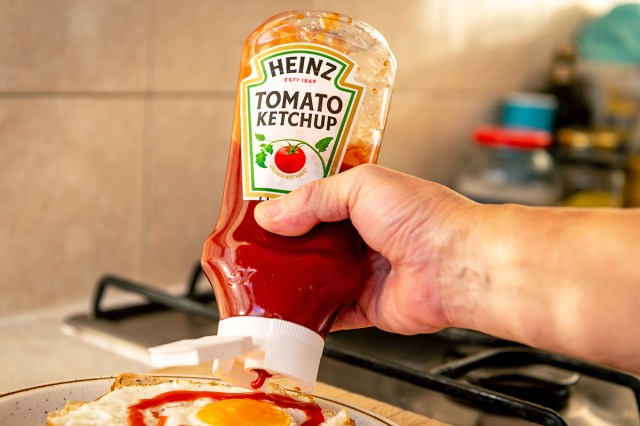
Heinz is one of the biggest ketchup producers in the world, and its iconic glass bottles can be found in supermarkets and restaurants worldwide. The condiment itself actually has a “speed limit” — a maximum flow rate of .028 miles per hour set by the company as an indicator of the product’s thick consistency.   

Each batch of ketchup is tested in a device Heinz calls a “quantifier,” which measures how far the product flows over the course of 10 seconds. If the ketchup travels too fast, indicating it isn’t sufficiently thick or doesn’t have the ideal texture,, it’s not released to the public.

In 2021, Heinz partnered with Waze and Burger King as part of a marketing campaign to reward drivers stuck in traffic with a free Impossible Whopper. Anyone forced to travel at the measly rate of 0.028 mph due to traffic was given redemption details in the Waze app.

And in 2023, Heinz released the “Slowmaster 57” in conjunction with the Abu Dhabi Grand Prix. Playing off the idea of race cars speeding at hundreds of miles per hour, this specially designed mini racetrack ramp invited people to test out the famous slowness of Heinz ketchup for themselves.

Credit: Nathalia de Franca Guimaraes/ iStock

Tomatoes Originated in South America

Though many people associate tomatoes with Italian cuisine today, they were originally cultivated in the Andes region of South America, though there are competing theories regarding the fruit’s precise lineage. Some believe the 10,000 modern tomato varieties can be traced to a pea-sized fruit native to parts of northern Peru and southern Ecuador called Solanum pimpinellifolium — also known as “pimp” — which was cultivated some 7,000 years ago.

However, a 2020 study indicates the timeline should be pushed further back to 80,000 years ago, when cherry-sized tomatoes may have been grown in Ecuador. In either case, these smaller tomato plants migrated to Mesoamerica, which is where tomatoes were first domesticated an estimated 7,000 years ago. 

It wasn’t until European explorers came to the Americas that tomatoes were introduced to the European continent. Sixteenth-century Spanish explorers encountered what the Aztecs referred to as tomatl (“plump fruit”), and returned to Spain with the treat in tow. Tomatoes were introduced to Italy via Spain no later than 1544 — the date of the earliest known printed reference to tomatoes, from Italian physician Pietro Andrea Mattioli.

Credit: Olga Yastremska/ iStock

Europeans Thought They Were Poisonous

When tomatoes first made their way to Europe, they weren’t exactly considered a culinary delicacy. In fact, they earned a frightening and unwarranted reputation for being toxic and were hence dubbed “poison apples.” 

It’s long been theorized that this unsavory reputation stems from reports of wealthy Europeans falling ill after eating tomatoes served on pewter plates, which contain lead. Given tomatoes are highly acidic, the acid would leach the lead from the plate, leaving the consumer with lead poisoning. 

However, author Joe Schwarcz argues in the Montreal Gazette that this oft-repeated lead theory is just a myth. Schwarcz claims the idea that tomatoes were poison likely stemmed from tomato plants being erroneously classified as deadly nightshades by uneducated herbalists. Tomato plants visually resemble the belladonna bush, whose fruits were known to be toxic, and so tomatoes were believed to be the same.

It was only around the late 1800s that European society began to view tomatoes as tasty, nontoxic treats. Tomatoes were normalized in part due to the 1880s invention of the modern pizza in Naples, Italy. This plus the 1897 debut of Campbell’s condensed tomato soup helped popularize tomatoes in the culinary world, and the fruit earned a far more favorable reputation.

Credit: Niday Picture Library/ Alamy Stock Photo

The Supreme Court Ruled Them To Be Vegetables 

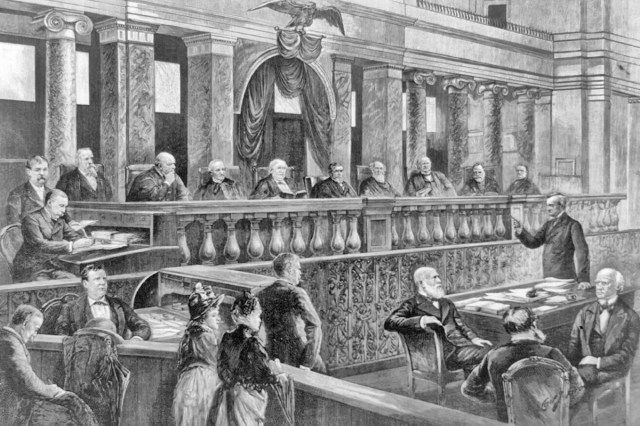
In 1893, the U.S. Supreme Court heard the case Nix v. Hedden, which debated whether tomatoes should be classified as fruits or vegetables for taxation purposes. This all came to pass after the Tariff of 1883 took effect, which imposed a 10% tariff on any imported vegetables. Imported fruits, however, were deemed tax-free. 

Tomatoes are indeed fruits in a botanical sense, because they meet two important criteria: They contain seeds and they grow from flowering plants. But many people viewed tomatoes as vegetables based on the way they were cooked and eaten, including Edward Hedden — the tax collector for the Port of New York.

It’s unknown whether Hedden didn’t realize tomatoes were technically fruits or simply chose to ignore that fact, but in either case he imposed the 10% tariff on the food. Manhattan-based wholesaler John Nix & Co. found this out the hard way when it was taxed on a shipment of tomatoes from the Caribbean. Nix argued tomatoes should be taxed like the fruits they are and subsequently sued Hedden.

In 1893, the Supreme Court unanimously ruled in Hedden’s favor, claiming that despite technically being fruits, tomatoes were more commonly treated as veggies by the general public and should therefore be taxed as such. Justice Horace Gray wrote in his opinion, “Botanically speaking, tomatoes are the fruit of a vine … But in the common language of the people, whether sellers or consumers of provisions, [tomatoes] are vegetables.”

Credit: Teen00000/ iStock

Tomato Juice Is the Official State Drink of Ohio

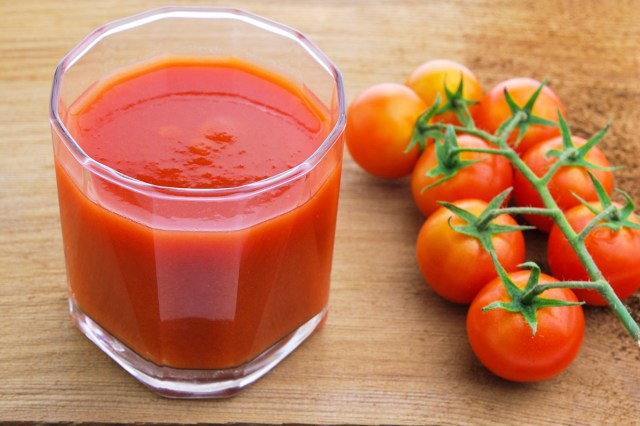
Before 1965, no U.S. state had an official state drink. But that changed on October 6 of that year, when the Buckeye State adopted Senate Bill 92, which stated, “The canned, processed juice and pulp of the fruit of the herb Lycopersicon esculentum, commonly known as tomato juice, is hereby adopted as the official beverage of the state.” While other states have since declared official beverages of their own (with milk being the most popular choice) Ohio remains the only state to name tomato juice as its official beverage.

This choice paid homage to the state’s thriving tomato industry; at the time, Ohio was the second-largest producer of tomatoes in the nation behind California. It was also a native Ohioan named Alexander Livingston who helped popularize tomatoes nationwide. In 1870, Livingston — a horticulturist by trade — developed the “paragon,” the first commercially successful variety of tomato in the U.S., and his hometown of Reynoldsburg continues to host an annual tomato festival dedicated to his legacy.

Credit: NASA/piemags/ Alamy Stock Photo

A Tomato Went Missing in the International Space Station

In March 2023, astronaut Frank Rubio harvested what’s considered to be the very first tomato grown in space. The fruit was grown as part of the eXposed Root On-Orbit Test System (XROOTS) — a test program to determine the feasibility of growing produce for astronauts to enjoy in space. 

Rubio grew the historic tomato on the International Space Station, though after harvesting, he subsequently misplaced the fruit. After 20 hours of searching, Rubio gave up and assumed the tomato had been lost forever. But that December, astronauts successfully recovered the lost tomato after eight long months of wondering where it could have gone. Though dehydrated, slightly squished, and mildly discolored, the fruit was in otherwise okay shape without any fungal growth.

Credit: Royalty-free/ Corbis Documentary via Getty Images

A 20,000-Person Tomato Fight Is Held Each Year in Spain

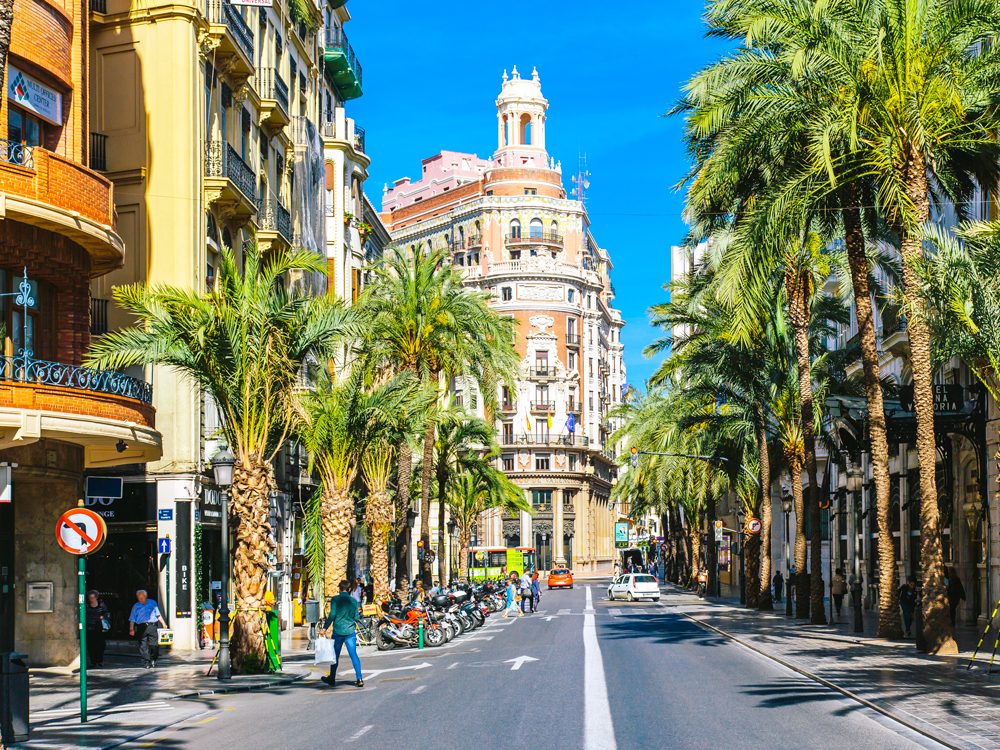
La Tomatina is an annual festival in which attendees pelt each other with tomatoes —  colloquially known as the “world’s biggest food fight.” The event occurs each year on the final Wednesday in August in the Spanish town of Buñol, located roughly 25 miles west of Valencia. 

While the town’s permanent population is just 9,000 people, as many as 50,000 revelers have participated in La Tomatina at its peak. The number of ticketed participants was capped at 20,000 in 2013, which is where it remains today.

The festival began in the 1940s, though it was temporarily banned in 1956 by the city council amid pressures from Francisco Franco’s dictatorial regime to disallow unauthorized celebrations. However, La Tomatina returned in 1957 in the form of a parodic “Burial of the Tomato” funeral procession, which instilled a deep sense of community in its participants. Due to mounting local pressure, the tradition was officially recognized as a city festival in 1959, with a more rigid organizational structure.

An estimated 330,000 pounds of tomatoes are hurled during the food fight each year, which are brought to the town by six loaded trucks. Organizers also make a point of limiting food waste by only using tomatoes that have been deemed unfit for consumption and would’ve otherwise been thrown out.

Bennett Kleinman
Staff Writer

Bennett Kleinman is a New York City-based staff writer for Inbox Studio, and previously contributed to television programs such as "Late Show With David Letterman" and "Impractical Jokers." Bennett is also a devoted New York Yankees and New Jersey Devils fan, and thinks plain seltzer is the best drink ever invented.

Original photo by BongkarnThanyakij/ iStock

Whether commuting on a train to work, riding the light rail into the city for a night out, or taking the bus across town to run an errand, the people aboard any form of public transport are likely trying to enjoy a quick and quiet trip to their destination — but sometimes the actions of a noisy or otherwise inconsiderate passenger can ruin the journey for their fellow riders. 

Those rude behaviors may include blasting music, taking up extra seats, or even talking loudly on the phone. Don’t be like that — instead, pay attention to these six etiquette tips for being a perfectly polite passenger.

Credit: andresr/ iStock

Use Headphones, Not Speakers

Loud audio coming from your phone is a surefire way to earn the ire of fellow travelers, whether it be from playing music, watching a video, or having a FaceTime conversation or phone call on speaker. This increasingly common practice is known as “bare beating,” describing disruptive audio that carries throughout an entire train or bus. As anyone who’s experienced bare beating knows, that tinny sound that emanates from a phone’s speakers can be highly disruptive and grating.

Public transit companies in states including New York, Pennsylvania, and Texas remind all riders to use headphones if listening to music, as it’s considered common courtesy. There’s also an ongoing effort in the U.K. to punish violators with hefty fines, but despite the advisories and warnings, bare beating continues to spread. 

One issue is that tech companies have removed standard headphone jacks from newer models of smartphones, requiring special corded connections or Bluetooth-enabled headphones. If someone doesn’t have one of those options easily accessible, they might listen to their phone audio over the speaker anyway. But the break in etiquette also has to do with modern browsing habits.

In an interview with The New York Times, etiquette expert Myka Meier touches on the idea that “we selfishly have interests that we are able to tap into any second of any day, and we are so used to it that we forget other people around us.” That said, we suggest doing your part to limit public transit noise by either keeping track of a pair of headphones or waiting until the ride is over to use your speakers.

Credit: urbazon/ iStock

Avoid Obtrusive Self-Grooming

While there’s nothing wrong with quickly reapplying lipstick or combing your hair so it looks presentable, some passengers groom themselves in a way that affects other riders. One of the most egregious examples is cutting your fingernails (or even toenails, as one San Francisco rider chose to do) in the middle of the train or bus. First and foremost this is a hygiene issue, as the detritus may land on a seat or in another person’s lap, but the sound of the clicking clippers is also annoying to fellow passengers. 

But cutting one’s nails is just the tip of the iceberg. Many self-grooming habits should be taboo on public transit, including shaving, plucking hairs, or applying certain makeups — anything that causes unwanted debris. New York Magazine’s style and culture guide The Cut adds that hairsprays and powdered makeup can negatively affect the quality of the communal air that everyone has to breathe. Don’t be the reason that the person next to you on the bus starts sneezing, and keep your grooming habits at home.

Credit: Aida Lopez Jimenez/ iStock

Keep Personal Items Off Seats

Whether you’re riding the bus, train, or ferry, it’s a widely accepted rule that seats are for passengers — not inanimate objects. The El Metro service of Laredo, Texas has a policy that puts it well: “You’re welcome to carry belongings as long as they’re small enough to fit on your lap or at your feet. Don’t block aisles or take over the seat beside you.”

If the train or bus is empty, you can get away with it, but it’s common sense to move your bags when the seats are needed — and don’t make someone ask you to move it. Keeping a large bag on the seat next to you is depriving someone of a much-needed place to sit. Putting your belongings in the aisle will impede foot traffic, so make sure to  place the bags on your lap or use any available luggage racks. Or do what etiquette expert Louise Fox suggests with a rhyming reminder: “Take only one seat and put packages and belongings at your feet.”

Credit: simonkr/ iStock

Let People Exit Before Boarding

When the train doors open, it’s tempting to rush into the car in order to grab one of the few available seats. But slow down — it’s basic etiquette to let all riders exit before anyone new enters the vehicle. In an article written for Trainline, etiquette expert William Hanson says, “Let others off the train before you try and get on and stand to the side of the train doors to allow disembarking passengers to exit easily.” 

If you stand in the doorway or try to rush on, you’ll end up creating a logjam. This makes the exiting and boarding process take longer, and the more it happens, the more likely it is to cause system-wide delays. Your rush can also create difficulties for passengers with disabilities attempting to exit. 

It’s good to remember that some people may need more time or space to navigate, and being patient won’t mean you’ll miss the ride. As Hanson says, “It’s not a race.” 

Credit: frantic00/ iStock

Don’t Consume Odorous Food or Drink

Some foods and drinks should be avoided on public transit, such as ones with particularly pungent odors and dishes that are prone to spillage. One extreme example of offensive food is commonly found throughout Southeast Asia. A native fruit called durian is banned from many public transport services due to its pungent odor. 

In an interview with the Huffington Post, etiquette expert Diane Gottsman says, “Your favorite snack may be a plastic container full of hard-boiled eggs, but these should be enjoyed in the privacy of your own kitchen.” Even if the food smells good, a powerful odor can make other passengers nauseous in such a confined space.

But not all food is taboo. Etiquette consultant Jodi R.R. Smith told the Huffington Post that people should opt for foods that are “self-contained and minimally fragrant.” Consider crackers, dried fruit, and similar items. When it comes to drinks, stick to water if possible, and use a lid to prevent accidentally spilling all over the vehicle — or worse, onto another person.

Credit: eclipse_images/ iStock

Know the Rules for Pets

Even if your dog is well-behaved and loving, public transit is no place to let them roam freely. While exceptions are made for service animals, pets (even those dubbed emotional support animals) are subject to a clear set of rules that each passenger is expected to adhere to. 

The exact requirements may differ on each transit system, so be sure to look up the pet guidelines before your trip. The MTA — which services the New York City area and is the busiest public transit route in the country — requires pets to be contained “in a bag or other container and carried in a way that doesn’t annoy other riders.” (Some people have gotten around this rule by carrying their animals in creative bag solutions, such as large IKEA tote bags — examples of which can be seen on social media.) 

Nevertheless, the train or bus is no place for an unleashed dog, even if they’re usually a very good boy or girl. If your pet is too large to abide by these rules, consider alternative forms of transportation (such as a private rideshare) that won’t affect other riders.

Bennett Kleinman
Staff Writer

Bennett Kleinman is a New York City-based staff writer for Inbox Studio, and previously contributed to television programs such as "Late Show With David Letterman" and "Impractical Jokers." Bennett is also a devoted New York Yankees and New Jersey Devils fan, and thinks plain seltzer is the best drink ever invented.

Original photo by princessdlaf/ iStock

From humble barley soup during the Great Depression to the rise of fast food-style staples such as pizza and chicken nuggets, the evolution of school lunches in the U.S. tells a story of changing priorities in American culture. Here’s how the typical foods on a school lunch tray have changed over the last century.

Credit: Library of Congress/ Corbis Historical via Getty Images

Early 20th Century

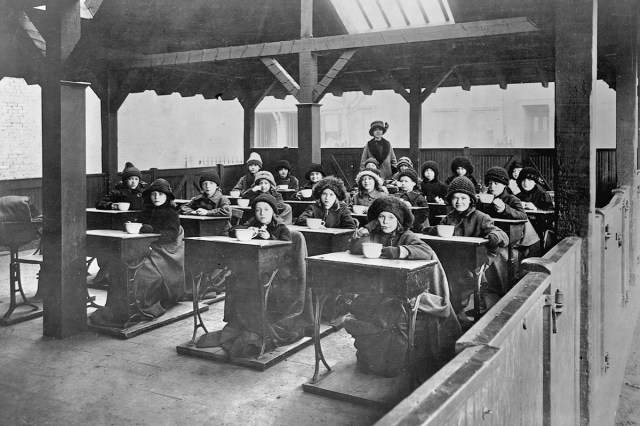
School lunches in the early 1900s were far from standardized — in fact, many schools in the U.S. didn’t serve lunch at all. After all, public education itself wasn’t compulsory in all 50 states until 1918. When school lunches were offered, they were often funded by charities, churches, local committees, or private donors, especially to assist low-income children. 

While some students went home for lunch, economic hardship during World War I meant that many kids went home to little or no food. Around this time, pediatricians began emphasizing the benefits of receiving a well-balanced meal at school, which led to the emergence of school lunch programs across the country.

In 1910, one experimental program in Boston began to feed elementary students twice a week. Eating at their desks (the schools lacked cafeterias), students enjoyed sandwiches and milk prepared by home economics classes. In Milwaukee, some children were able to enjoy a warm meal by purchasing items such as soup and rolls for 1 cent. Those who couldn’t afford to pay received food for free.

Some schools received enough funding to provide students with a variety of lunch options, featuring à la carte pricing. In Cincinnati, for example, a rotating menu of five items was available for a penny each. The options included things such as hot meat sandwiches, sausages, baked sweet potatoes, oranges, bananas, “candy balls,” graham crackers, rice pudding, and cakes.

By contrast, rural districts across the nation didn’t receive the same level of funding as urban schools, leading to more meager lunch options. Students typically received cold meals, most of which were of “questionable nutritive value,” according to Gordon W. Gunderson, author of “The National School Lunch Program.”

Teachers took the initiative to help students heat jars of food brought from home by using water boiled in buckets on the classroom stove. Some foods commonly brought from home in these communities included soup, macaroni, and cocoa.

Credit: PF-(usna)/ Alamy Stock Photos

The Great Depression

As the Great Depression devastated the nation during the 1930s, growing concerns about childhood malnutrition pressured schools to respond accordingly. Many states introduced legislation allowing schools to serve daily meals, creating structure and uniformity among school lunch programs. By 1937, 15 states had passed laws authorizing schools to operate physical lunchrooms (which functioned like modern lunchrooms with staff and seating), and the federal government began offering support.

During this time, the U.S. Department of Agriculture (USDA) began purchasing surplus food from farmers and distributing it to schools and food pantries. Despite nationwide economic struggles, this federal intervention helped schools provide healthier meals, often including hard-to-get items such as fresh produce and meat. 

Still, menu options were limited to what was available, so there wasn’t much variety. For instance, children reportedly hid apples in toilets to fake the appearance of having eaten them after growing tired of eating the fruit every day. A typical Depression-era school meal included a simple soup, such as lima bean and barley, with a bread-and-butter sandwich, chocolate pudding, and milk.

Credit: ZUMA Press, Inc./ Alamy Stock Photo

World War II

As the Great Depression came to an end, the U.S. found itself facing a new crisis: World War II. Schools began to place a greater emphasis on nutrition (known as “defense nutrition”) than ever before, to improve the readiness of future soldiers. During this era, recommended dietary allowances were introduced to establish a 2,000-calorie daily diet after many young military recruits showed signs of malnutrition. 

A 1944 War Food Administration poster recommended a healthy school lunch should consist of one hot dish (e.g., meat or vegetables), a sandwich, fruit, and milk. Common menu items included chipped beef, broiled carrots, and prune pudding. For many children, this was the only hot meal they’d eat all day.

World War II highlighted the importance of school meals. After the war ended, President Harry Truman signed the 1946 National School Lunch Act, providing permanent federal aid for such programs and quickly expanding the availability of school lunches across the nation. In Truman’s words, “No nation is any healthier than its children or more prosperous than its farmers.”

Credit: Ted Streshinsky Photographic Archive/ Corbis Historical via Getty Images

Baby Boom

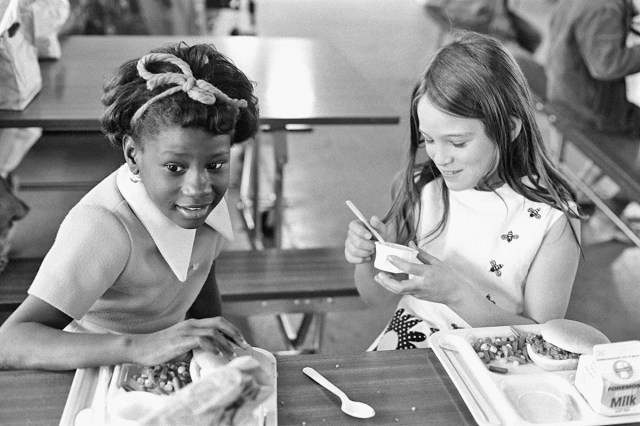
Along with the postwar baby boom came a rising demand for school meals. During the 1950s, private companies began contracting with school districts to introduce more menu options. A focus on protein-rich meals — such as liver-sausage loaf, meatloaf, and pork-apple salad — started around this time.

The 1960s saw the emergence of modernized school cafeterias, featuring streamlined services, diverse menus, and a greater emphasis on taste. This was largely driven by the expanding student populations that followed the 1954 abolition of segregated schools. 

School meals also became less health-focused, often featuring popular items such as country-fried steak, carrot relish, cornmeal yeast rolls, and peanut butter cake. However, schools didn’t receive enough federal money to cover their costs. During the 1970s, a series of legislation overhauled the lunch programs, allowing more districts to partner with private food vendors while simultaneously expanding free or reduced lunch programs.

Concerns about childhood obesity also began to grow during the 1970s. Efforts were made to promote healthier meals, but after opening cafeterias to the private sector, the introduction of fast food undermined nutritional goals. Although they were offered healthier choices such as vegetable soup and fresh fruit, students began to favor less nutritious items such as hamburgers, pizza, chicken nuggets, tacos, Jell-O, and juice. This marked the emergence of processed, prepackaged school foods, a trend that continues today.

Credit: James Leynse/ Corbis Historical via Getty Images

Modern School Lunches

During the 1990s, fast-food chains such as McDonald’s found their way into school cafeterias, sparking a wave of reform. Nutrition advocates pushed back against unhealthy lunches, instead championing fresh produce, whole grains, and low-fat dairy. 

The Healthy, Hunger-Free Kids Act (HHFKA) of 2010 introduced significant changes by revising nutritional guidelines, regulating school vending machines, and giving thousands more students access to free or reduced-fare lunches. School salad bars gained popularity, but processed food remained a standard, albeit in new whole-grain or reduced-sodium forms. Today, schools continue to juggle taste, nutrition, and budget as awareness of healthy eating grows.

Rachel Gresh
Writer

Rachel is a writer and period drama devotee who's probably hanging out at a local coffee shop somewhere in Washington, D.C.

Original photo by andresr/ iStock

Each time you fill up at the gas station, you’ll notice there are multiple fuel options, each with distinct characteristics and intended applications. The primary fuel types available typically include regular gasoline, plus (or mid-grade) gasoline, premium gasoline, and diesel fuel. 

These different grades represent fundamentally different fuel compositions designed for specific engine types and performance requirements, and knowing which one to choose is vitally important for the health of your vehicle. Putting more expensive premium gas in a car that doesn’t require it won’t improve performance, while using a lower grade of gas than what’s recommended can lead to problems. 

To best understand the various gasoline types, we first need to understand the basics of two terms: “octane ratings” and “engine knocking.” Octane ratings are measures of fuel stability based on the pressure at which a fuel will spontaneously combust in an engine; the higher the number, the more stable the fuel. 

A higher rating means the gasoline is more resistant to what is known as engine knocking. It occurs when the air-fuel mixture in an engine cylinder ignites prematurely, before the spark plug fires, potentially damaging the engine. So the higher the octane rating, the more stable the fuel, and the better it is at resisting engine knocking (diesel, being a different fuel type altogether, experiences its own distinct type of knocking).  

With the basics of octane ratings and knocking in mind, let’s take a look at the four most common fuels available at the gas station — but no matter which one sounds right for your ride, it’s always best to check your vehicle’s manual before filling up. 

Credit: fredgoldstein/ iStock

Regular Gasoline: The Standard Choice

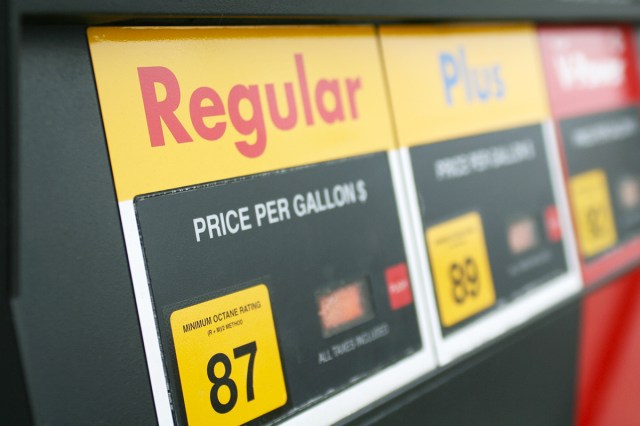
Regular gasoline, typically rated at 87 octane, is the most commonly used automotive fuel in the United States. This fuel grade is formulated to meet the basic requirements of most standard passenger vehicles, including sedans, SUVs, and trucks with naturally aspirated engines (engines in which the air intake depends on atmospheric pressure alone rather than requiring forced induction). 

From an economic perspective, regular gasoline offers the best value for vehicles designed to use it. Putting premium fuel in an engine designed for regular gasoline provides no performance benefits and is, to put it bluntly, a waste of money. The engine management systems in vehicles designed for regular fuel are calibrated to optimize performance and efficiency with 87 octane fuel, making it the logical choice for most drivers.

Credit: jabejon/ iStock

Plus Gasoline: The Middle Ground

Plus gasoline, also known as mid-grade or intermediate gasoline, typically carries an octane rating of 89. This fuel grade occupies the middle ground between regular and premium gasoline, both in terms of octane content and price. Plus gasoline is often created by blending regular and premium gasoline at the pump, though some refineries produce it as a distinct product.

Mid-grade fuel accounts for only about 7% of all gasoline sales, and it’s likely that at least some of those sales are the result of drivers who unnecessarily purchase plus gasoline thinking it offers some kind of benefit when regular gas would do exactly the same job. Plus gasoline represents a compromise solution rather than an optimal choice for most vehicles. 

So then, why does it exist? The only real application for plus is in vehicles that experience slight knocking with regular fuel — typically older vehicles from the 1980s and 1990s — but that don’t require the full octane rating of premium gasoline. Among cars sold today, hardly any actually require mid-range, 89 octane gas, apart from some RAM 1500 trucks, Dodge Durangos, and the Jeep Grand Cherokee. 

Credit:  Lemon Photo/ iStock

Premium Gasoline: High-Performance Fuel

Premium gasoline is any gas with an octane level of 91 or greater, with 91 octane and 93 octane being the most common versions of premium gasoline available at gas stations in the United States (93 octane is sometimes called “ultra” or “super-premium”). 

Premium is specifically formulated for high-performance and luxury vehicles. It contains a higher concentration of octane-boosting compounds that allow it to withstand higher compression and temperature without pre-igniting. This gives it superior knock resistance, making it ideal — and in many cases essential — for vehicles with high-compression engines, turbochargers, or superchargers. 

Putting premium gas in a vehicle designed to run on regular‐grade fuel offers no benefits: It won’t produce more horsepower, improve fuel economy, or result in lower tailpipe emissions. However, due to its superior-sounding name, many consumers confuse premium gas for “better” gas. 

In 2016, the American Automobile Association found that 16.5 million Americans ignored manufacturer recommendations for regular gasoline and instead used premium, unnecessarily spending a whopping $2.1 billion per year on premium‐grade gasoline when regular would have worked just as well. 

Today, more vehicles require premium gasoline than ever before. More than half of all light-duty models (as opposed to heavy-duty vehicles) sold in 2024 require premium, including the Chevrolet Suburban, Dodge Durango, Nissan Z, and Toyota GR. Some new-vehicle buyers may not realize they’ve purchased a model that requires the more expensive type of gas until after they’ve already taken the car home, so it’s important to always ask in advance to get the full scoop on what you’re signing up for. 

Credit: Federico Rostagno/ Adobe Stock

Diesel Fuel: A Different Option Altogether

Gasoline and diesel are both fuels derived from petroleum, but diesel represents a fundamentally different approach to automotive power, utilizing compression ignition rather than spark ignition. Diesel has a greater energy density than other liquid fuels and is typically used in vehicles requiring high torque and fuel efficiency, such as commercial trucks, most construction and farming vehicles, and other heavy equipment. Gasoline, on the other hand, is used for vehicles that require more horsepower and that favor speed over brute strength. 

As a vehicle owner, it’s vital to know whether your vehicle runs on gas or diesel. However, it’s actually quite difficult to accidentally fill up your car with diesel if it takes gasoline, because most diesel fuel pump nozzles have a larger diameter filler pipe than gasoline nozzles.

If you do manage to put diesel in a non-diesel vehicle, it’s best to not start the engine and instead call a mechanic right away. Your car may move a few miles, but it will then likely come to a stop, potentially causing cylinder and timing issues in your engine that could cost thousands of dollars to repair.

Tony Dunnell
Writer

Tony is an English writer of nonfiction and fiction living on the edge of the Amazon jungle.

Original photo by AlbertPego/ iStock

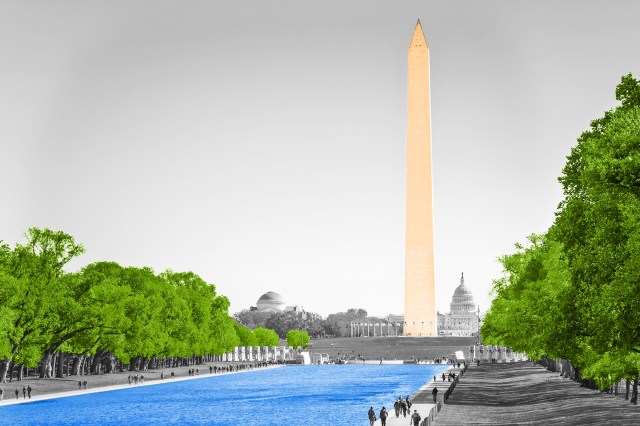
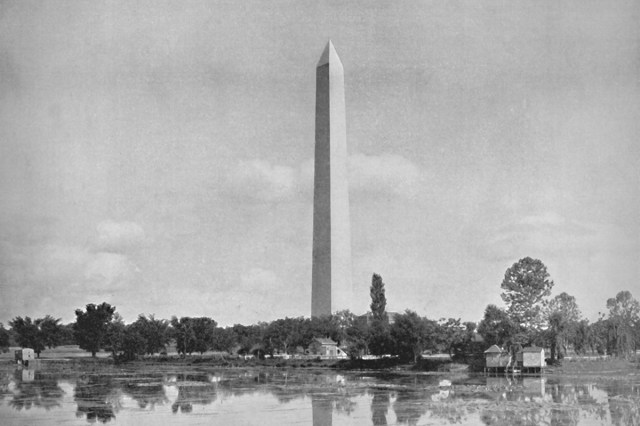
Created to honor the legacy of George Washington, the towering marble obelisk that stands on the National Mall in Washington, D.C., serves as a reminder of the indelible role the first U.S. president played in the country’s history. 

The Washington Monument is one of the nation’s most recognizable landmarks, but there’s also a fascinating backstory behind its imposing appearance. Here’s a look at five little-known facts about this iconic American structure.

Credit: Print Collector/ Hulton Archive via Getty Images

It Was Once the World’s Tallest Structure

After 36 years of construction, the Washington Monument was finally completed on December 6, 1884, clocking in at 555 feet and 5.125 inches tall, making it the world’s tallest building at the time. The obelisk wrested this title from the previous record holder, Germany’s 516-foot-tall Cologne Cathedral, which had been the world’s tallest building since its completion in 1880.

The monument’s time as the world’s tallest structure lasted only five years, as it was soon overtaken by the 1,083-foot-tall Eiffel Tower in 1889. But the Washington Monument remained the tallest human-made monument in the United States until 1939, when the 567-foot-tall San Jacinto Monument was completed in La Porte, Texas. Nowadays, the obelisk ranks third in this category, having also been surpassed by the 630-foot-tall Gateway Arch in St. Louis, Missouri.

Credit: Library of Congress/ Corbis Historical via Getty Images

The Stone Blocks Are Held Together Without Cement

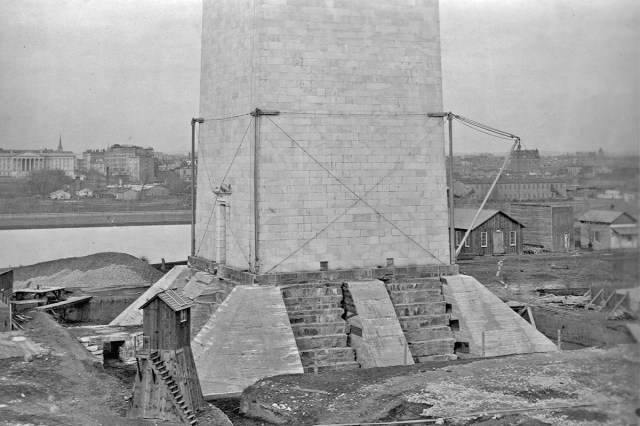
While stone structures are often held together by mortar (a combination of cement, sand, and water), the Washington Monument is a notable outlier whose blocks are held together simply by gravity and friction. Engineers did use some mortar on the project, though it was for weatherstripping purposes rather than structural support. 

What’s more, there’s no reinforced steel skeleton or any other supporting mechanism. In a 2011 report for Today, Al Roker noted the monument “is built the way the pyramids were … It is the weight of the stones that actually keeps [the monument] together.” According to Carol Johnson of the National Park Service, the lack of mortar technically makes the Washington Monument the world’s “tallest free-standing stone structure.”

Credit: Photo 12/ Universal Images Group via Getty Images

The Pope Donated a Stone (Which Was Later Stolen)

During the monument’s early construction, commemorative stones were donated from around the world, which were later included in the obelisk’s interior walls. All told, 193 such stones were incorporated, including one made of Alaskan jade and another that was constructed using remnants from the Parthenon in Greece. Pope Pius IX even donated a stone on behalf of the Catholic Church, though this donation was met with backlash, and the stone was eventually stolen.

The pope’s stone read “A Roma Americae” (“From Rome to America”) and was made of materials taken from the ancient Temple of Peace in Rome. But not everyone was enthused by this donation, especially nativist, anti-Catholic political groups in the U.S. such as the Know Nothing Party. One widely circulated pamphlet read, “This gift of a despot, if placed within those walls, can never be looked upon by true Americans but with feelings of mortification and disgust.” 

Nonetheless, the stone was donated and kept in storage until it was to be incorporated into the larger monument. However, the pope’s donation was stolen in 1854 by nine anonymous Know Nothing Party members, who subsequently damaged the stone beyond repair and threw it into the Potomac River. It wasn’t until 1982 that the stone was finally replaced when Pope John Paul II sent over a replica to be installed.

Credit: Bettmann via Getty Images

A Small Aluminum Pyramid Sits Atop the Monument

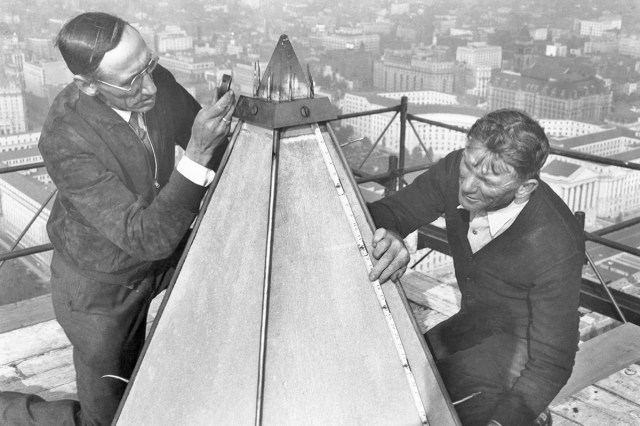
The Washington Monument’s original design called for a flat top made of stone, unlike the pointed tip we know today. But the engineers eventually decided to top the monument with a pointed metal tip to serve as a lightning rod and protect the stone structure from damage.

Engineer Thomas Lincoln Casey Sr. — who oversaw the final phases of the monument’s construction  — consulted William Frishmuth, a metallurgist in Philadelphia, who suggested the tip be made of aluminum. Frishmuth cast an 8.9-inch, 100-ounce piece of aluminium for the monument — the largest ever cast at that time. 

Before delivering the aluminum cap to D.C., Frishmuth displayed it at Tiffany’s in New York City. On December 6, 1884, the cap finally made its way to the nation’s capital, where it was placed atop the Washington Monument to complete its construction.

In an interview with Atlas Obscura, Dru Smith of the National Geodetic Survey noted that the aluminum cap was less durable than anticipated. Within six months, repeated lightning strikes had whittled the tip down by three-eighths of an inch. In July 1941, it was nearly recycled as part of a nationwide aluminum scrap drive to support the World War II war effort, though it still remains in place today.

Credit: dibrova/ iStock

The Color Changes 152 Feet Up

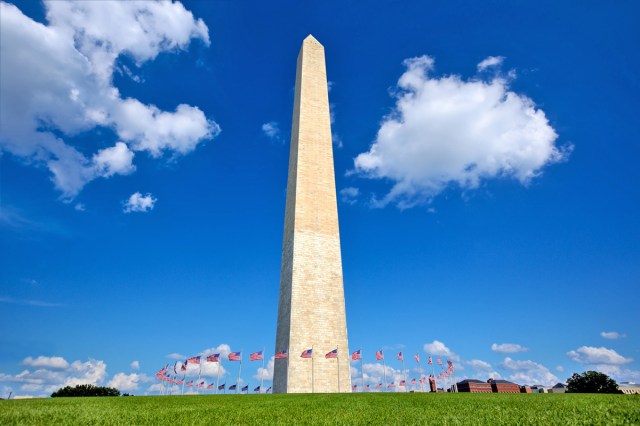
If you examine the Washington Monument closely, you’ll notice the color of the stone changes roughly a third of the way up the obelisk. This is because there was a substantial delay during the landmark’s construction. When work finally resumed, stone had to be sourced from different quarries, and the two distinct types of stone have aged differently ever since.

The first phase of construction lasted from when the cornerstone was laid in 1848 until construction was halted in 1854 after private donations ran out. By the end of that phase, the monument had reached a height of 152 feet. 

In 1876, Congress formally authorized a resumption of construction. But at this point, the stone could no longer be sourced from the Baltimore quarry that was initially used. Instead, marble was sourced from a different Maryland quarry and combined with  granite from several quarries in New England.

When the monument was completed in 1884, its color appeared to be uniform from top to bottom. However, the two sets of stone began to age individually as they weathered wind, rain, and other environmental factors. Today, there’s a clear visible difference between the stones used during the initial and latter phases of construction, with the upper two-thirds of the monument appearing slightly more yellow than the lower third.

Bennett Kleinman
Staff Writer

Bennett Kleinman is a New York City-based staff writer for Inbox Studio, and previously contributed to television programs such as "Late Show With David Letterman" and "Impractical Jokers." Bennett is also a devoted New York Yankees and New Jersey Devils fan, and thinks plain seltzer is the best drink ever invented.

Original photo by Mike Prince/ Unsplash

Sleep duration varies drastically across the animal kingdom, with some critters such as the koala sleeping for as many as 22 hours each day, while others require just a few hours of daily rest to function. Sometimes these abbreviated sleep schedules are due to external factors (such as the threat of predators), but in other cases it has more to do with a creature’s biological makeup. Let’s take a closer look at seven animals that require very little sleep.

Credit: Michael/ Adobe Stock

Elephant Seals

According to a 2023 study, elephant seals sleep for less than two hours a day when out at sea, which is among the shortest average total among mammals. They also don’t sleep for two hours straight; instead, they take several naps that often last for less than 20 minutes. Elephant seals tend to sleep at depths of around 1,000 feet for added security, to stay below potential predators.

The 2023 study helped answer some long-debated questions as to when elephant seals sleep. Study author and oceanographer Jessica Kendall-Bar told the National Science Foundation, “The dive records show that [elephant seals] are constantly diving, so we thought they must be sleeping during what we call drift dives, when they stop swimming and slowly sink… Now we’re finally able to say they’re sleeping during those dives.” 

It’s worth noting that this shortened sleep pattern only occurs for about seven months out of the year. During breeding season — which usually lasts from November to March — elephant seals come ashore and sleep for more than 10 hours each day. This makes elephant seals unusual,” according to Kendall-Bar, as “they switch between getting a lot of sleep when they’re on land … and two hours or less when they’re at sea.”

Credit: bucky_za/ iStock

African Elephants

Leading up to the publication of a 2017 study on elephant sleep patterns, researchers tracked two free-roaming African elephants through Botswana. Their findings suggested these creatures tend to sleep for just two hours per day, often between the hours of 2 a.m. and 6 a.m. They also noted that the elephants went without sleep for as many as 46 hours in a sustained period of activity that may have had something to do with the threat of potential predation.

This isn’t to say elephants aren’t capable of sleeping for longer periods of time. For example, captive zoo elephants may sleep for between four and six hours, given the more secure environment. Wild elephants in larger family groups also tend to sleep for longer periods of time given their strength in numbers. The matriarch of a large herd may even sacrifice her own sleep in order to keep an eye out for predators, thus allowing others in the herd to rest. Basically, elephants may sleep for longer periods if there’s no perceived threat, though they often function on a mere two hours of sleep.

Credit: MARIOLA GROBELSKA/ Unsplash

Giraffes

In the wild, giraffes sleep for as little as 30 minutes a day, often due to their need to remain alert in the face of potential predators. Free-roaming giraffes have even been observed sleeping while standing up in order to allow for a quick escape, and they’ve been known to lean against trees to support their long necks and bodies. 

According to the San Diego Zoo, 30 minutes may actually be on the high end for wild giraffes, as some giraffes get as little as five minutes of sleep for every 24-hour period. This meager amount of sleep may come in the form of short  bursts of one or two minutes rather than one prolonged sleep session.

Of course, much like other animals, a giraffe’s sleep schedule may change in captivity. For instance, it’s normal for zoo-based giraffes to sleep for around six hours a day, as there’s no immediate threat to their safety. Whether in the wild or in captivity, the majority of this sleep happens in the nighttime, though it’s often supplemented by brief afternoon naps.

Credit: SeppFriedhuber/ iStock

Walruses

The sleep patterns of an average walrus differ quite substantially depending whether the animals are on land or in the water. On land, walruses tend to be major sleepyheads, dozing off for anywhere between two and 19 hours at a time, according to a 2009 study. But walruses have unparalleled endurance while in the water and have been known to stay awake when swimming for as long as 84 straight hours.

Walruses are prone to experiencing a phenomenon known as unihemispheric sleep, which essentially means half the brain sleeps while the other half stays active, allowing walruses to enjoy prolonged periods of activity while still resting part of their brain.

Credit: janeff/ iStock

Fruit Flies

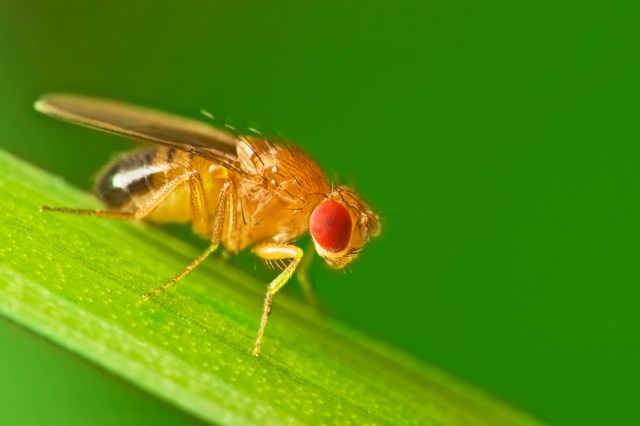
In 2019, researchers analyzed a group of fruit flies to learn more about the critters’ sleep patterns. As expected, some of the bugs slept for substantial periods of time — anywhere from five to 10 hours a day. However, the research team also noticed something unusual among certain fruit flies: Around 6% of female fruit flies slept for just 72 minutes a day, while some outliers slept for as little as four minutes. 

To make matters more interesting, the flies that slept for shorter periods lived just as long as the flies that slept longer. While it’s been hard to make any conclusive claims based on the findings thus far, it raises some interesting questions about just how much sleep is truly necessary for fruit flies — and similar animals — to survive.

Credit: vkilikov/ Adobe Stock

Newborn Bottlenose Dolphins

While mature bottlenose dolphins have relatively unremarkable sleep schedules, newborns tend to avoid sleep altogether. Most babies in the animal kingdom require sleep to develop, but that’s not the case for these marine mammals. 

For the first month of life, bottlenose dolphins don’t sleep at all. Instead, the dolphins remain continually active and come up to the surface to breathe every three to 30 seconds. These findings come from a 2005 study led by researcher Jerome Siegel, who told New Scientist magazine, “The idea that sleep is essential for development of the brain and body is certainly challenged.”

Once dolphins reach maturity, they’re known to sleep for between five to eight hours per day, though the manner in which they sleep is quite different from what we’re used to as humans. Instead of becoming fully unconscious, they experience unihemispheric sleep, same as walruses. Even when “sleeping,” dolphins of many different species leave one eye open to stay aware of their surroundings, and half their brain rests while the other half functions.

Credit: Daniel Quiceno M/ Unsplash+

Cows

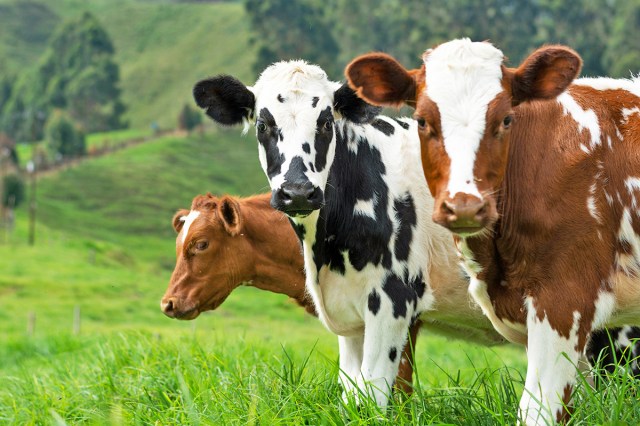
Cows tend to live a relaxing lifestyle; you’ve probably seen them grazing or lying in open fields. But when you see a cow sprawled out on the grass, odds are it’s simply drowsing — resting but remaining conscious — rather than outright sleeping. 

According to a 1972 study, cows drowse for roughly eight hours a day. They only sleep for up to four hours each day, which is on the low end among mammals. For example, chimpanzees sleep 9.5 hours each day, dogs nap anywhere between 10 and 18 hours, and housecats average 12 to 16 hours of daily sleep.

Cows, however, generally manage around 45 minutes or so of REM sleep, or deep sleep. In a 2019 study of dairy cows, it was discovered that this sleep comes in three to five minute periods that add up over the course of the entire day.

Bennett Kleinman
Staff Writer

Bennett Kleinman is a New York City-based staff writer for Inbox Studio, and previously contributed to television programs such as "Late Show With David Letterman" and "Impractical Jokers." Bennett is also a devoted New York Yankees and New Jersey Devils fan, and thinks plain seltzer is the best drink ever invented.

Original photo by klebercordeiro/ iStock

It’s a hot summer day and you’re enjoying that perfect scoop of ice cream to beat the heat. But then — ow! —  a sharp zing of pain shoots through your mouth. Or maybe you’re at the movie theater, savoring some Junior Mints or Skittles when that jolt of discomfort kicks in.

If you’ve ever winced while eating ice cream, sipping an iced coffee, or biting into a candy bar, you’re not alone. Millions of people deal with tooth sensitivity, and while it may feel alarming, the reasons behind it are usually simple, rooted in our evolution as a species. Let’s explore what’s really happening when your teeth react to cold or sweet foods — and what you can do about it.

Credit: sujit kantakad/ iStock

Teeth Are Tough, But Also Sensitive

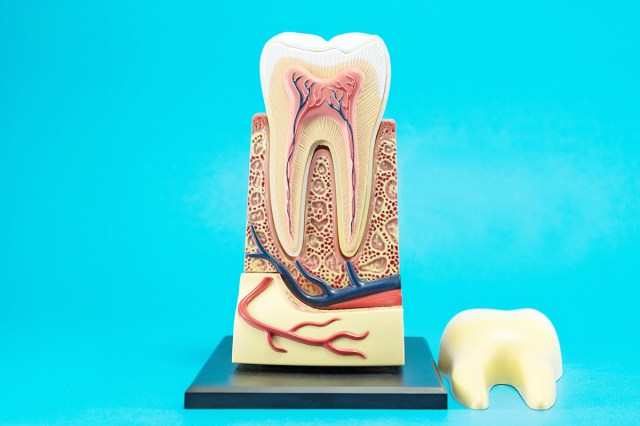
Your teeth may look like simple little bones, but they’re far more complex, and more sensitive, than they seem. Each tooth is made up of multiple layers. The outermost layer, enamel, is the hardest substance in your body and serves as a protective shell. Beneath the enamel is dentin, a more porous material filled with microscopic tubules

Those tiny channels lead to the pulp, where your tooth’s nerves and blood vessels live. When enamel wears down or gums recede, the dentin gets exposed — and that’s when discomfort can start. 

Cold drinks and food can be especially painful because they cause rapid temperature shifts in the mouth. Those sudden drops in temperature move quickly through the dentin’s tubules, stimulating the nerves and producing that painful zing. Cold tends to cause a more abrupt shift than heat, which is why it often provokes a sharper, more intense response. 

Sweet foods introduce a different challenge; sugar can seep into those open channels and irritate the nerves directly. It also feeds the mouth’s bacteria, which produce an enamel-weakening acid as a byproduct. While cold is the most common culprit, even hot or tangy food and beverages can lead to pain if the dentin is already exposed. This all adds up to a cycle of sensitivity that’s surprisingly easy to trigger.

Credit: StefaNikolic/ iStock

Our Teeth Can Become More Sensitive as We Age

Tooth sensitivity often becomes more noticeable as we get older. That’s because the protective layers around the nerves — enamel and gum tissue — gradually wear down over the years. Brushing too hard or using a stiff-bristled toothbrush can also contribute to enamel erosion and gum recession. 

And once the roots of your teeth are exposed, they’re especially vulnerable to pain. Unlike the crowns of your teeth, roots aren’t covered by enamel — just a thin layer of a specialized calcified substance called cementum that can easily wear away.

Other common causes of sensitivity include nighttime teeth grinding (bruxism), which can wear down enamel over time, as well as recent dental procedures such as fillings or deep cleanings, which may leave teeth temporarily tender. A combination of age, daily habits, and gradual wear-and-tear makes older adults more prone to feel that sudden sting when eating or drinking cold, sweet, hot, or even sour foods.

Credit: Science History Images/ Alamy Stock Photo

Teeth Weren’t Always Tools for Chewing

So as we age, our teeth may become more vulnerable — but that sensitivity isn’t a mere design flaw. In fact, it may be a feature that dates back hundreds of millions of years.

Recent research on ancient fish fossils reveals that teeth didn’t originally evolve for biting or chewing at all. The earliest tooth-like structures appeared more than 465 million years ago as part of the tough, armored skin of jawless fish. 

Those structures weren’t for eating — they were for sensing. Embedded in bony plates, they likely helped fish detect subtle changes in their environment, acting more like pressure or motion sensors than tools for eating food.

Over time, as fish evolved jaws and began snapping at prey, those sensory structures migrated inward and became specialized for biting and processing food, but they never shed their original function entirely. Even today, teeth are wired to be highly sensitive, especially to changes in temperature, pressure, and chemical composition. In a way, that sharp pain you feel when you sip something cold is a throwback to an ancient biological function: Your teeth aren’t just for chewing — they’re also essentially little environmental sensors in your mouth.

Credit: gpointstudio/ iStock

That Twinge May Be Your Tooth Demanding Attention

Occasional tooth sensitivity isn’t always cause for concern, but if the discomfort becomes frequent or intense, or if it lingers, it could point to something more serious such as a cavity, cracked tooth, or gum disease. Teeth are excellent messengers when something’s not quite right, and they typically won’t stop signaling until you do something to alleviate the pain.

Understanding the root causes of sensitivity can help you respond with more care and less worry. Small changes, including avoiding overly acidic foods or switching to a softer toothbrush or one specifically meant for sensitive teeth can make a big difference over time and make it easier to enjoy your favorite dessert.

So the next time you feel that sudden zing after a cold drink or sweet bite, you can thank evolution — and take it as a gentle reminder to give your teeth a little extra care. After all, they’re millions of years in the making.

Kristina Wright
Writer

Kristina is a coffee-fueled writer living happily ever after with her family in the suburbs of Richmond, Virginia.

Original photo by SWLphoto/ iStock

Clothing is often made to stand out, but beyond the bold prints and tailored cuts, some useful and clever details may also be lurking. You may not notice them unless you know what to look for: some strange stitching, a little extra fabric, or a seemingly random hole. 

These are more than just design quirks — they’re well-planned elements with a specific purpose. Here are a few of the hidden features in your wardrobe that make your clothing more versatile than you may realize.

Credit: apugach/ iStock

Extra Fabric in Seams and Hems

If you’ve ever peeked inside a suit jacket or at the hem on a pair of dress pants, you may have noticed a little more fabric than seems necessary. It’s not sloppy sewing — it’s actually quite the opposite. 

Known as seam or hem allowances, this extra material allows for easy alterations. It’s not as common in mass-produced clothing, but in higher quality or tailored pieces, that extra fabric exists so the item can be adjusted, whether you need to let out the shoulders, lengthen the sleeves, or amend the waist. 

Standard seam allowances are usually around one-half to five-eighths of an inch, but in garments made for alteration, they may be closer to 1 inch or more. Hems, especially on pants or coats, can have 2 or even 3 extra inches folded under. It’s a subtle but smart detail that could just give that favorite coat of yours a second life. 

Credit: seraficus/ iStock

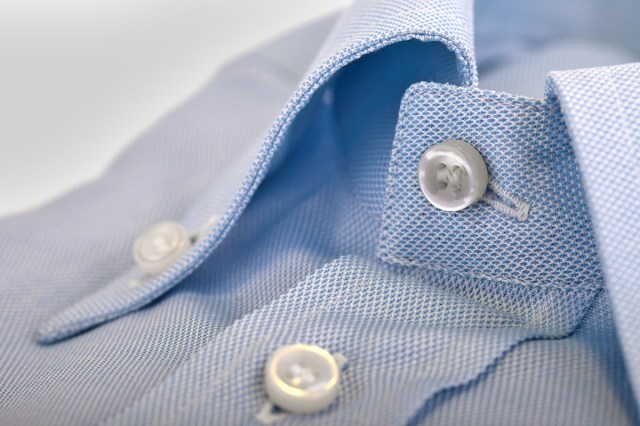
Horizontal Buttonholes

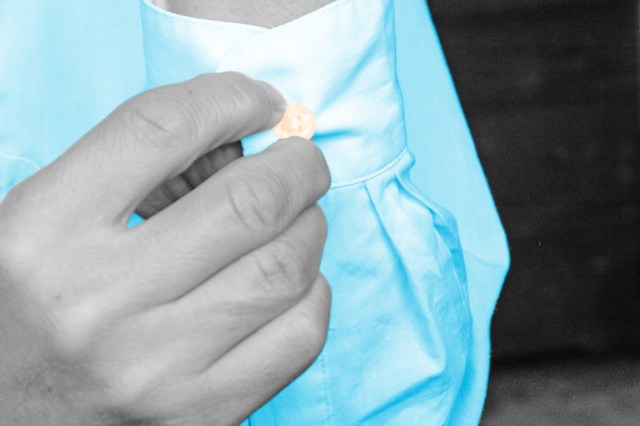
On many dress shirts, you’ll notice something a little different about the very top and bottom buttonholes: They’re horizontal openings, while the rest are vertical. This subtle variation is a clever way to help keep those buttons from popping open

Vertical buttonholes are easier to fasten, but that also means they’re easier to unfasten, which isn’t ideal in high-stress spots such as the collar or waist. Horizontal buttonholes make the top and bottom buttons less likely to pop open when you adjust your tie, tug on your collar or shirt hem, or tuck and untuck your shirt. 

Credit: SomeMeans/ iStock

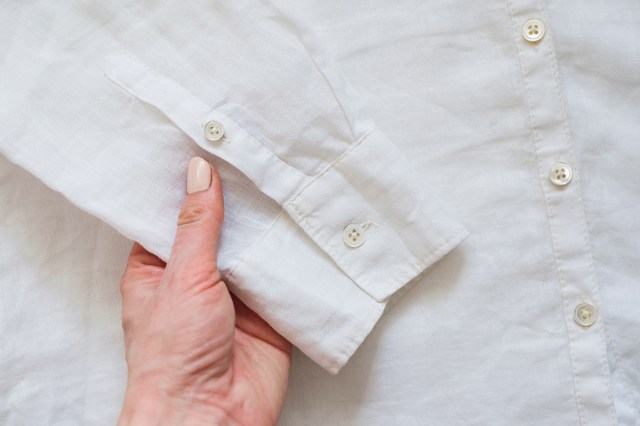
Sleeve Plackets

Most button-up shirts have plackets, aka a reinforced opening in a garment. It’s typically held shut with buttons, snaps, or a zipper, and its purpose is to make a garment easier to get on or off. 

On a dress shirt or blouse, for instance, a placket holds the buttons that fasten the shirt. And sleeve plackets allow the cuff to open up wider so you can easily slide your hand through or roll up your sleeves without stretching or tearing the fabric. Without this, your options would be tight cuffs or oversized sleeves — neither of which is especially ideal.

A standard sleeve placket has a peaked “roof” shape at the top and two overlapping sections: a wider strip roughly 6 inches long and an underlap that’s usually around half an inch. This key part of a shirt sleeve’s construction also helps the cuff lie flat and look polished when buttoned, a small but thoughtful detail that does a lot of quiet work.

Credit: Stakhov-Yuriy/ iStock

Hanger Strings

You’ve probably noticed thin ribbon, string, or even clear rubbery loops dangling from the inside shoulders of sweaters or dresses. They seem to serve no purpose (other than perhaps being slightly annoying) when you’re wearing the garment. But those strange little strings are actually very helpful, ensuring slippery clothes stay put on your hangers.

By looping them over the hanger hooks, they help distribute the weight of the item more evenly across the hanger and prevent wide or delicate necklines from sliding off and ending up crumpled on the closet floor. They’re not glamorous, and many people just cut them off, but for structured storage, they’re quite practical.

Credit: Michael Derrer Fuchs/ Adobe Stock

Shoulder Straps

You’ll see them on trench coats and leather jackets and motorcycle jackets: short straps on the shoulders, usually snapped closed near the collar. They’re also called epaulettes, and while they’re mostly decorative today, they have a practical history. 

The word “epaulette” comes from epaule, a French word for shoulder. Early epaulettes were simple cloth straps used to keep sashes, belts, or gear from slipping — a handy feature for soldiers carrying bags, rifles, or swords. They were also a way to display rank, with embroidered insignia placed on the strap or near the rounded portion around the edge of the shoulder.

In the 1830s, both the U.S. Army and Navy began phasing them out of everyday uniforms in favor of flat shoulder straps, partly because the raised epaulettes were considered too conspicuous. But the style stuck around. On modern motorcycle jackets, shoulder straps can still serve a functional purpose by helping keep bag straps from sliding while riding. Whether or not you use them that way — or ever even thought to at all — they’re a time-tested nod to utility.

Credit: Tarzhanova/ iStock

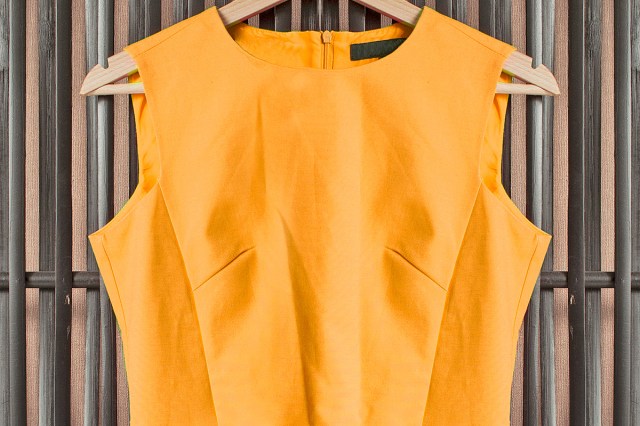
Material Darts

If you’ve ever noticed small, triangle-shaped seams near the bust or waist of a shirt or dress, they aren’t the same as the V-shaped “Dorito” near a sweatshirt collar — what you’re looking at are actually called “darts.” These stitched folds help shape the garment to the human body, creating structure and definition in all the right places.

Darts allow designers and sewists to contour clothing without relying on stretchy fabrics or loose fits. You’ll find them most often in tailored items such as blouses, dresses, and suit jackets, subtly transforming otherwise flat fabric into a three-dimensional shape that drapes over your body the way it should.

Credit: kool99/ iStock

Heel Locks

Some athletic shoes have extra eyelets near the top, set a bit back from the rest, that don’t seem to have much of a reason for being there. Maybe you’ve ignored them, assuming they were simply decorative, or perhaps you’ve included them when lacing up your kicks. 

If the latter is the case, you’ve accidentally discovered heel-lock lacing. Also called a runner’s loop, using these heel locks helps create a tighter fit around the ankle to keep your heel from sliding around (which can happen even if your running shoes fit well).

To lock that heel in, loop each lace through the top eyelet on the same side to form a small loop, then cross the laces and pull them through the opposite loops before tying a regular bow. They’re not strictly necessary, but if you’ve got the eyelets, you’ve got the option — and your feet will probably thank you for it.

Nicole Villeneuve
Writer

Nicole is a writer, thrift store lover, and group-chat meme spammer based in Ontario, Canada.