
Original photo by Alena Ivochkina/ iStock

The human body contains a panoply of biological wonders. The human eye can detect around 1 million colors, and the nose can discern a trillion distinct scents. The brain is the most complex form of consciousness in the animal kingdom, and it takes the coordination of 200 muscles just to move our bipedal bodies around. Amid all these incredible capabilities, our nails get little scientific attention. Yet they are a rarity in nature — in fact, only primates have them, thanks to the evolution of their dexterous fingers. 

Embedded in your nails are other tiny mysteries, including the light-colored half-moon shape at the bottom of the nail plate. Though few of us stop to think about the purpose of this mark, its existence is a vital part of our nails and also serves as an indicator of our overall health. Here’s a closer look at this curious feature of our fingernails.

Credit: 4FR/ iStock

The Scientific Name Is Latin for “Little Moon”

The crescent-shaped mark at the base of the nail is known scientifically as the lunula, which is Latin for “little moon.” Although it has its own specific name, the lunula is only the visible part of a larger structure known as the nail matrix. That structure is one of the four major parts of the fingernail, along with the nail plate, nail bed, and the skin surrounding the nail (including the cuticle). Arguably, the matrix, which contains nerves, lymph, and blood vessels, is the most important of the four as it produces the cells that eventually harden into nail plates. 

Although the lunula can be many colors (more on that later), it typically appears white because it’s made of layers of newly formed cells that haven’t fully hardened and become transparent yet. (The rest of the nail is a pinkish color because the transparent plate allows the blood underneath to show through.) Sometimes lunulae will be easily visible and other times they can be obscured — usually because they’re hidden under the cuticle, though in some cases an obscured lunula could be a sign of a medical condition such as diabetes or heart disease.

— advertisement —

Credit: Irada Zaitova/ iStock

The Color Can Be an Indicator of Health

The lunula, and the fingernail more generally, is a remarkable glimpse into our overall health. Typically, a healthy person will have white lunulae, but if the area is a different color it could be indicative of a potentially serious health condition. According to Healthline, the lunula can appear in various colors including blue, brown, black, red, and yellow, and can be an indicator of diabetes (pale blue), heart failure (red), renal failure (brown), or other serious conditions. This is why doctors will often examine your nails when you go in for an annual physical. 

— advertisement —

Credit: Mauricio Toro/ iStock

It’s a Visible Part of Nail Growth

The nail matrix serves another important function: regenerating the nail. Although it may not seem like it, our nails are always growing. They grow out from the base of the nail at a rate of roughly 1 nanometer (one-billionth of a meter) every second, which averages to about 3.47 millimeters per month. (If you’ve ever noticed that you tend to trim your fingernails more frequently than your toenails, that’s because a toe’s nail matrix produces only 1.62 millimeters of nail per month on average.)

Nails grow from the nail matrix (which includes the lunula), where special cells create multiple layers of keratin, the same protein that makes up hair. The typical nail has roughly 196 layers of these cells. So the lunula is essentially the visible portion of the growth zone, where new cells are actively produced right before your eyes.

Darren Orf
Writer

Darren Orf lives in Portland, has a cat, and writes about all things science and climate. You can find his previous work at Popular Mechanics, Inverse, Gizmodo, and Paste, among others.

Original photo by Clara Bastian/ iStock

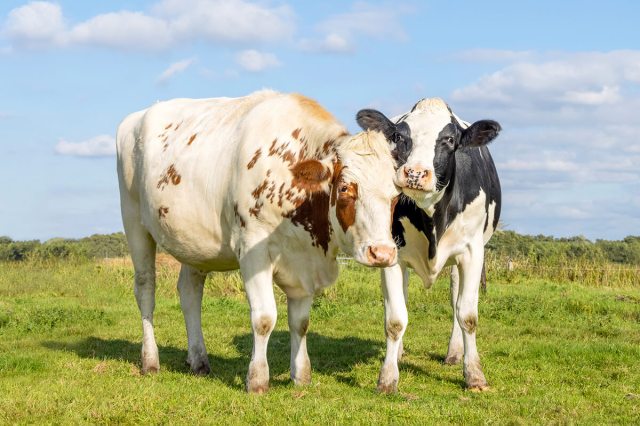
Cows are often underestimated — they’re typically seen as slow-moving livestock, chewing cud in a pasture. But there’s far more to these gentle giants than meets the eye. Beyond being sources of milk and beef, cows are intelligent, emotional, and socially complex animals with surprisingly sophisticated behaviors. They form close bonds, solve problems, and even show preferences for cleanliness and companionship.

Understanding the true nature of cows not only deepens our appreciation for them, but also has real-world benefits: It can lead to improved farming practices, better animal welfare standards, and a more respectful relationship with the creatures that play such a vital role in global agriculture; there are around 86.7 million head of cattle in the United States alone. With that in mind, let’s take a closer look at these fascinating animals.

Credit: Clara Bastian/ iStock

Cows Have Best Friends

Cows form deep social bonds within their herds and are capable of developing close friendships. Research from the University of Northampton in the U.K. found that cows not only form strong emotional connections with each other, but also experience stress when separated from their preferred companions. When cows are paired with their best friend, their heart rates lower, and they exhibit fewer signs of anxiety.

These social relationships extend beyond simple companionship. Cows establish hierarchies within the herd and communicate through body posture, vocalizations, and mutual grooming. Recognizing these social behaviors is crucial for improving animal welfare on farms. By creating environments that respect the natural instincts and social needs of cows, farmers can reduce stress and promote healthier, more content animals.

— advertisement —
Credit: Gabriel Dominella/ iStock

Cows Are Smarter Than You Think

The phrase “dumb as a cow” couldn’t be further from the truth. Cows are intelligent animals capable of learning and problem-solving. In cognitive studies, cows have demonstrated the ability to solve puzzles, remember tasks for long periods, and even anticipate future events based on past experiences.

For example, one study showed that cows were capable of opening a gate to reach food after watching a demonstration — and they remembered how to do it weeks later. Some researchers have compared bovine learning abilities to those of dogs and even primates. Cows can even be trained to perform specific tasks, such as operating milking robots. The animals have also shown signs of emotional intelligence, such as frustration when faced with unsolvable problems and excitement when they succeed, indicating a level of awareness and mental engagement that’s often overlooked.

— advertisement —
Credit: hayatikayhan/ iStock

Cows Have a Powerful Sense of Smell

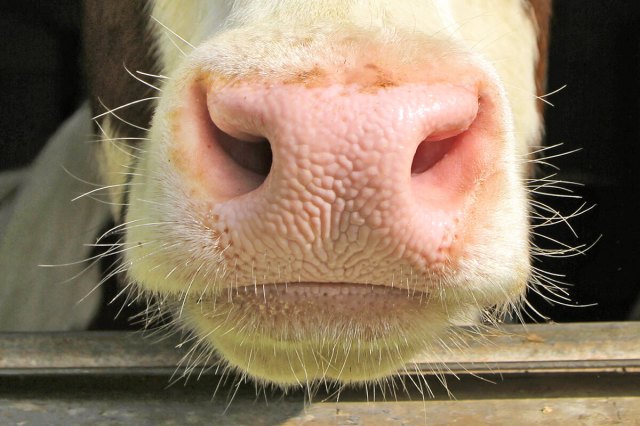
Cows have an exceptional sense of smell and can detect odors several miles away. This adaptation plays an important role in their survival, allowing them to detect predators and locate water or food sources. Their keen noses also help them recognize other cows and distinguish between different individuals, including humans.

In practical terms, this means cows are incredibly sensitive to changes in their environment, especially unfamiliar scents. They can react strongly to new smells, which may affect their behavior and stress levels. Farmers can use this knowledge to improve animal handling practices, such as introducing new equipment gradually or using calming scents during veterinary procedures, transportation, or weaning.  

Credit: Wildnerdpix/ iStock

There Are More Than 1,000 Different Breeds

Cows are among the most diverse domesticated animals, with more than 1,000 recognized breeds worldwide. These breeds have either evolved naturally or been selectively bred to thrive in a wide range of climates, perform specific tasks, or produce different types of milk or meat. For example, Holstein Friesians are prized for their exceptionally high milk yield, making them a staple on dairy farms in more than 150 countries. Highland cattle, with their thick, shaggy coats, are uniquely suited to Scotland’s cold, rugged terrain. In contrast, Zebu cattle, common in India and Africa, are heat-tolerant and resistant to parasites — ideal traits for tropical and subtropical regions.

This remarkable diversity not only speaks to the cow’s adaptability, but also to its enduring value across cultures and continents. From the long-horned Ankole-Watusi cattle of East Africa, revered for their dramatic appearance and cultural symbolism, to the “sacred cattle of India,” the hardy Brahman cattle, known for their strength and resilience, cattle have been shaped by both human needs and environmental demands for thousands of years.

— advertisement —
Credit: pidjoe/ iStock

Cows Have a Four-Chambered Stomach

Cows have a complex, four-chambered stomach that allows them to digest tough, fibrous plant material that most animals can’t process. This remarkable system — made up of the rumen, reticulum, omasum, and abomasum — lets cows ferment their food with the help of trillions of microbes, effectively transforming grass and hay into valuable nutrients. The process, known as rumination or “chewing cud,” is slow and deliberate, but it’s what enables cows to survive and thrive on low-quality forage.

In newborn calves, the abomasum is the only functional compartment. It operates much like the human single-chambered stomach until the full ruminant system develops within several weeks of birth. By about 2 to 3 months old, calves can start digesting roughage such as hay and grass. The composition of a cow’s diet — which ranges from wild pasture grasses and legumes to supplemental feeds such as soybeans and corn — plays a big role in the quality and taste of the milk they produce. For example, cows that graze on lush grasslands in Devon and Cornwall produce exceptionally rich, high-fat milk, which is key to making England’s famous clotted cream.

Interesting Facts
Editorial

Interesting Facts writers have been seen in Popular Mechanics, Mental Floss, A+E Networks, and more. They’re fascinated by history, science, food, culture, and the world around them.

Original photo by Viktoria Korobova/ iStock

Ask 10 people what their favorite and least favorite foods are, and you’re likely to get 10 completely different answers. The food, textures, and flavors we love (and hate) are determined by thousands of tiny sensory organs, and not just on the tongue — we also have taste buds in the throat, nasal cavity, epiglottis, and esophagus.

Although we often assume the bumps on the tongue that are visible to the naked eye are our taste buds, this is not quite true. These bumps are called taste papillae, and they house the small, flower-bud-shaped capsules that are the true taste buds. Chemical compounds responsible for flavor pass into each taste bud via a microscopic hole called a taste pore. From there, sensory cells collect information on the chemicals to determine where they fit into five flavor categories — sweet, salty, bitter, sour, and umami — before sending this information to the brain via nerve fibers. Here are six more facts about our tiny but mighty taste buds.

Credit: Ovsiienko Mariia/ Shutterstock

Our Taste Buds Require Saliva To Work

If we somehow completely dried off our tongue and then took a bite of food, we’d find the food suddenly has little to no flavor. This is because saliva is a critical component of our tasting capabilities. Chemicals responsible for flavor in food must first dissolve into some kind of liquid — in this case, saliva — before they can enter the taste buds and be analyzed by hundreds of sensory cells. 

Credit: The Num Phanu/ Shutterstock

Some Humans Are “Supertasters”

Good news, picky eaters: Your touchy palate could be a sign that you’re a supertaster, a name given to people with a heightened sense of taste. Supertasters have been found to have more taste papillae on a 6-millimeter section of the tongue than the average individual — around 35 to 60 compared to the median 15 to 35. This makes them far more sensitive to flavor components of food and drink. Supertasters often find bitter foods such as spinach or coffee unbearably bitter, and it might not take much sugar for them to think something is cloyingly sweet.

Credit: Xsandra/ iStock

Taste Preferences Are a By-Product of Evolution 

Food and drink provide much more than pleasant flavors to enjoy, although they certainly do that, too. They also give us energy-dense nutrients and help control our sodium levels, and our taste buds help us decide which foods we need. Our preferential tastes stem from the centuries of evolutionary processes that taught us that bitterness can be a sign of toxicity, sourness can indicate unripe or spoiled foods, and sweetness often translates to energy. 

One of the most interesting evolutionary effects on taste has to do with bitterness. Humans have approximately 25 bitter flavor receptors on our tongues, allowing us to differentiate between bitterness associated with toxic, sickness-inducing plants and other substances and the bitterness associated with good plants like leafy greens, radishes, and cauliflower. In contrast, humans only have two taste receptors for less risky flavors, like sweetness. 

Our relationship with sweetness shines a fascinating light on the connection between the foods we eat and the chemicals in our brain. While it’s true that sugar provides energy, it can also be detrimental to our health when consumed in too-large quantities. Evolutionarily speaking, it would be reasonable to assume that we wouldn’t crave a surplus of sugar if it were actually bad for our well-being. 

However, consuming sugar releases serotonin, a feel-good brain chemical that can deplete when we’re stressed, underfed, or in need of sleep. When we have intense sugar cravings, it’s not necessarily that our body is looking for sugar. Our brains might be on the hunt for serotonin via a chocolate bar or fizzy can of soda. Similar mechanisms are behind our craving fatty, oily foods. Our brains have released serotonin in the past when responding to these unhealthy but delicious flavors, thus, we continue to crave them.

Taste preferences can also vary by region and culture. A 1994 study found that Inuit populations are more sensitive to salt due to their heightened exposure to dangerous levels of saltwater in drinking water. The same study found that inhabitants of savanna landscapes have lower sensitivity to sweetness because naturally sweet foods, like fruit, are less common in the area. Cultural behaviors and norms can also affect taste. 

Infants can form flavor preferences in utero based on what their mother eats. With enough generations of the same culture eating a certain food, some tastes will become naturally ingrained in our flavor palates as “good” or “bad.” In Western culture, vanilla is associated with sweetness because it’s so common in baked goods and sweet treats. But in east Asia, where vanilla is a common ingredient in savory dishes, these peoples don’t have the same sweet association.

Credit: Eva-Katalin/ iStock

It’s Possible To “Trick” Our Taste Buds 

The flavor-producing chemicals in foods and drinks are affected by the overall environment of our mouth. Alter the environment, and you can alter the flavor, essentially “tricking” the taste buds into perceiving something as sweet or bitter when it typically isn’t. For example, artichokes contain an antioxidant called cynarin that binds to sweet receptors on the tongue without activating them (otherwise, artichokes would taste sweet). When we take a drink of water after eating an artichoke, we wash the cynarin off the surface of the tongue, activating the sweet receptors of the brain and making the water taste sugary sweet. 

A similar phenomenon also explains why orange juice tastes so terrible after we brush our teeth. Toothpaste contains a cleaning agent called sodium lauryl sulfate that scientists hypothesize reduces our ability to taste sweetness and maximizes our sensitivity to bitterness. Thus, when we take a swig of morning OJ after brushing our teeth, we taste all the juice’s acidity and bitterness and none of the sweetness.

Credit: luchezar/ iStock

Eating Spicy Foods Activates Pain Sensors in the Mouth

Our brains perceive spicy foods as “hot” even if the foods themselves are cold to the touch. This “heat” comes from temperature-sensitive pain fibers in the mouth that equate certain sensations, such as the burn of capsaicin (found in chile peppers), with high temperatures. When capsaicin activates the pain sensors, these sensors send signals to the brain that make the body believe it’s overheating. That’s why eating spicy food can lead to redness in the face, panting, and sweating. So, no, we’re not just imagining that habanero pepper hurts to eat — according to our brains, the food is actually painful.

Credit: PeterHermesFurian/ iStock

The Traditional Tongue Map Has Been Scientifically Disproved 

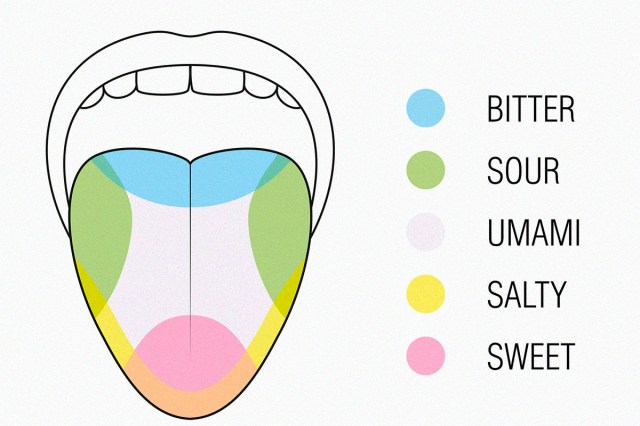
For years, we’ve based our understanding of flavor processing on a tongue map commonly taught in schools, which is based on a 1901 study by German scientist David Hanig that sought to explain the sensitivity of various parts of the tongue. The tongue map we’re familiar with divides the tongue into different taste zones, with bitter flavor receptors at the back of the tongue, sweet receptors at the tip, sour on the sides, and so on. Hänig’s research correctly found that parts of the tongue have greater quantities of taste receptors than others, but his map suggested that only certain areas of the tongue can perceive certain flavors, an idea that’s since been refuted by modern scientists. In reality, all five flavors — and the thousands of flavor combinations between them — are perceptible in all taste buds, whether they’re on the tip of the tongue, the back of the throat, in the nasal cavity, or anywhere else taste buds can be found.

Melanie Davis-McAfee
Writer

M. Davis-McAfee is a freelance writer, musician, and devoted cat mom of three living in southwest Kentucky.